Rebuilding the #2 self-storage auction platform
After Storable acquired StorageAuctions.com, its core workflow was sending operators to the support line. In 2024, I redesigned the entire seller application from operator research in six months, and persuaded Engineering to rebuild it on Storable's shared design system.
- Role
- Sole designer, research through visual design
- Timeline
- 2024 · 6 months, whole application
- Scope
- Workflow redesign, design system migration, rebrand
- Product
- B2B auction platform for storage operators


The problem
StorageAuctions.com is the #2 auction platform in the self-storage industry. Facility operators use it to auction the contents of delinquent units. After the acquisition it was still an island: its own brand, its own UI patterns, and a front end disconnected from the rest of Storable.
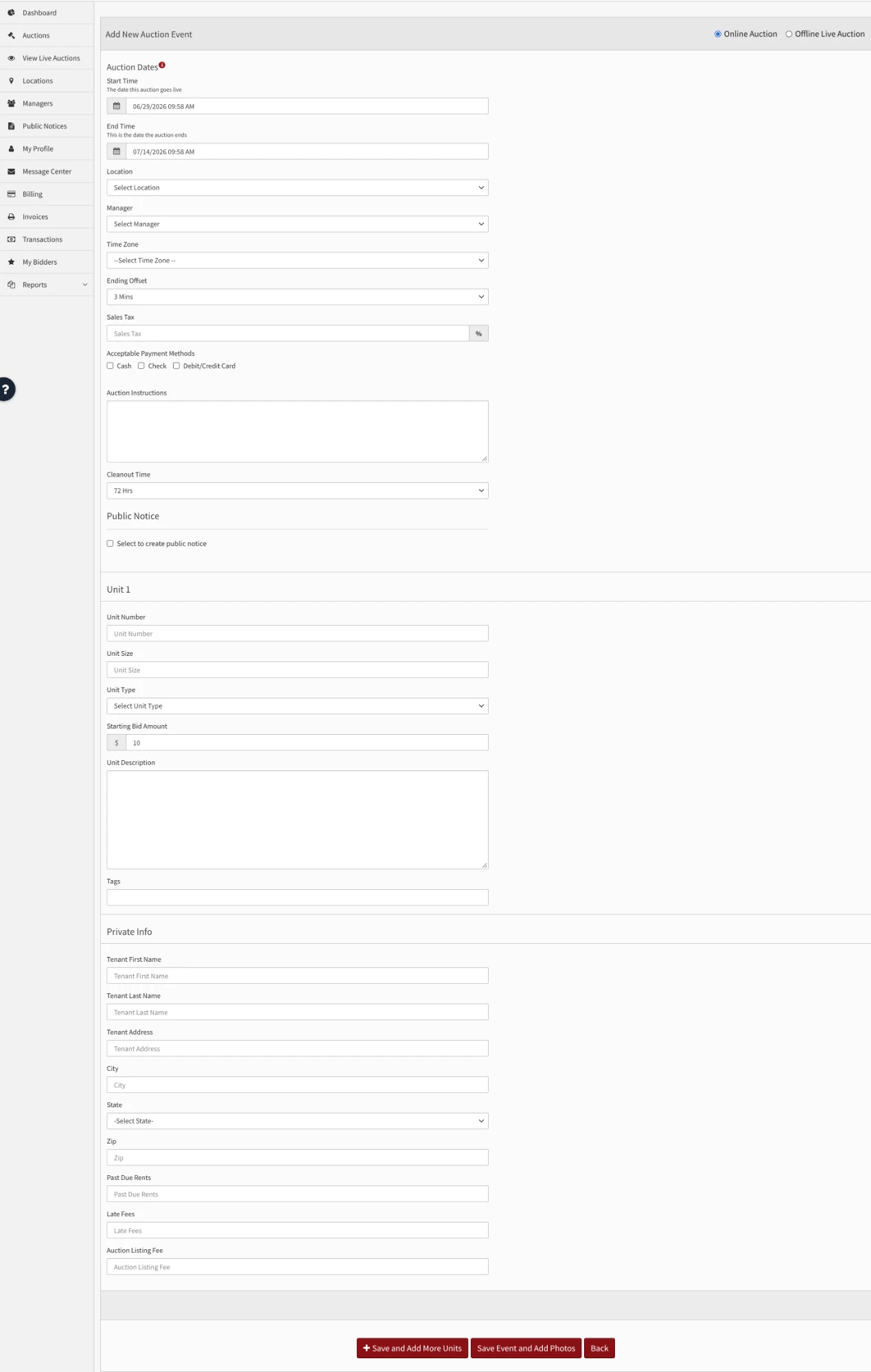
Its most-used workflow, creating an auction, was also its weakest. On every auction, operators had to:
- Re-enter facility settings by hand: time zone, ending offset, sales tax, payment methods, instructions, and cleanout time.
- Scroll through one long form of about 26 inputs, with public listing details and private tenant debts mixed together.
- Guess which button to press: three competing red buttons, no primary action, and no way to save a draft.
Research
I interviewed operators about how auctions fit into a day at the facility, and the support staff who took their calls about it. Two findings shaped the design. Most of what operators typed never changed from one auction to the next, and they were constantly interrupted at the counter mid-task.
Design decisions
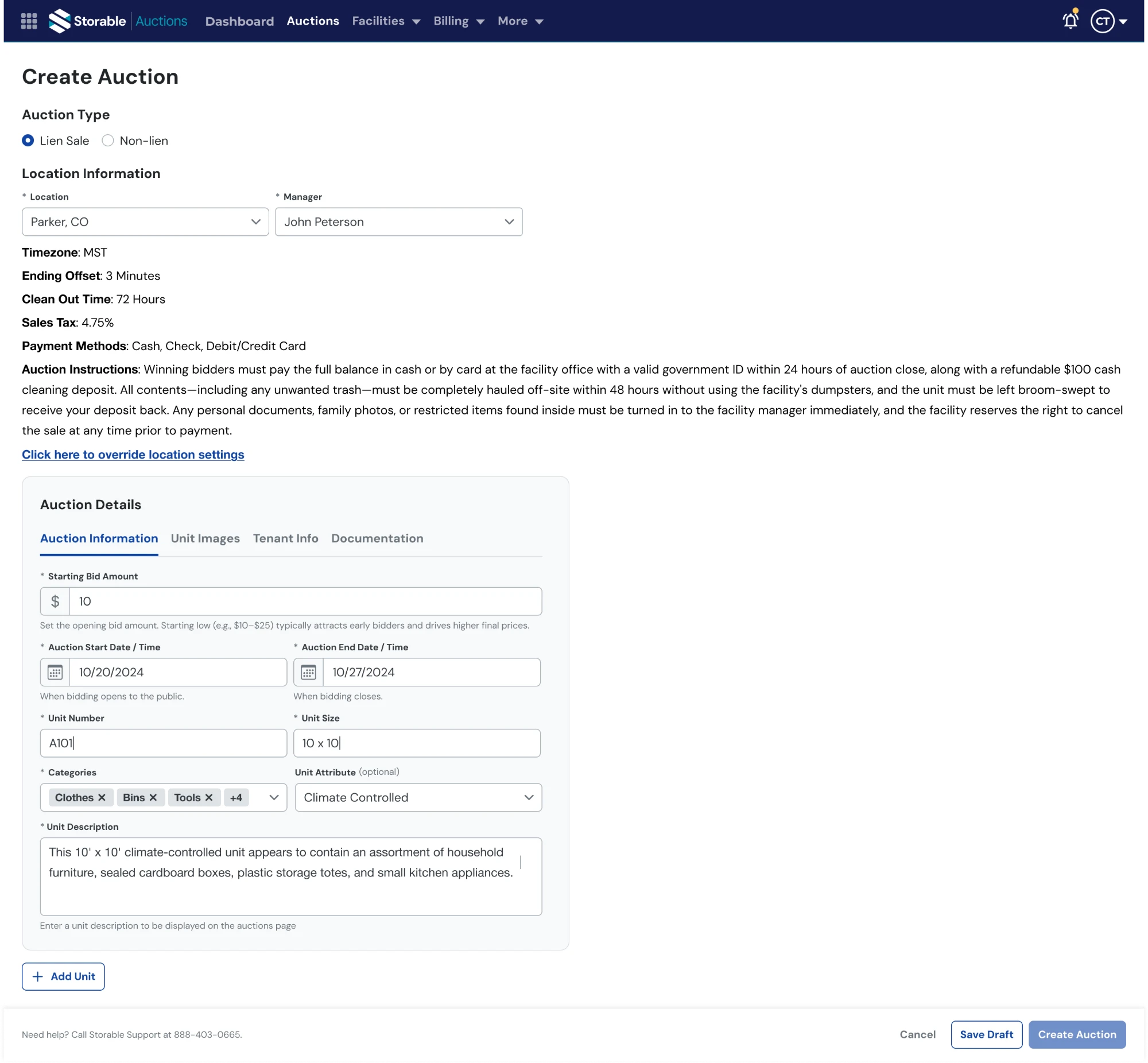
Location settings carry over
Choosing a location fills in its six settings as a read-only summary. An "override location settings" link handles the rare exception without cluttering the common case.
Split the form into tabs
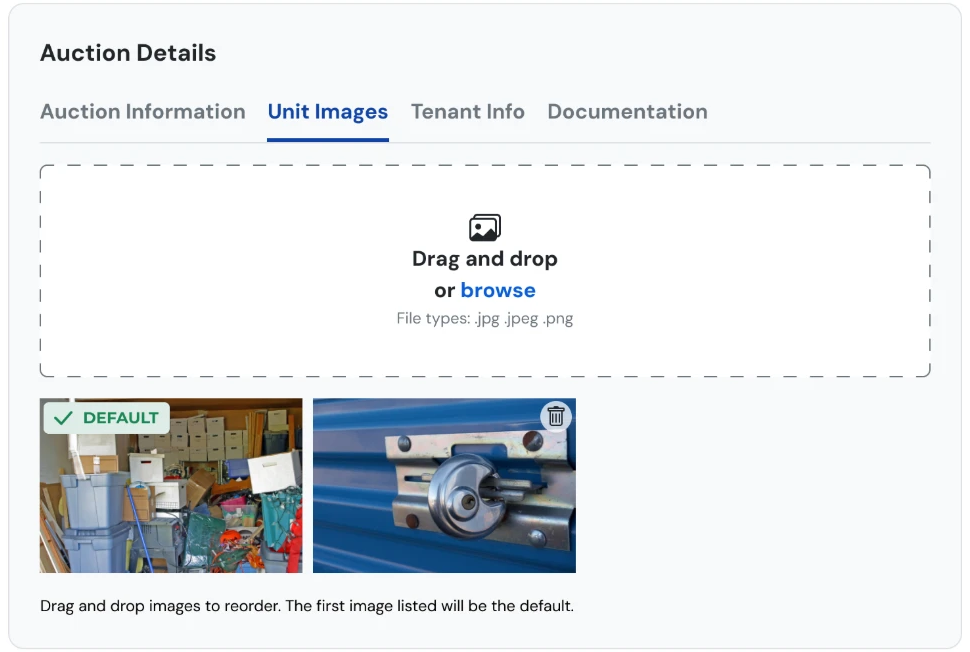
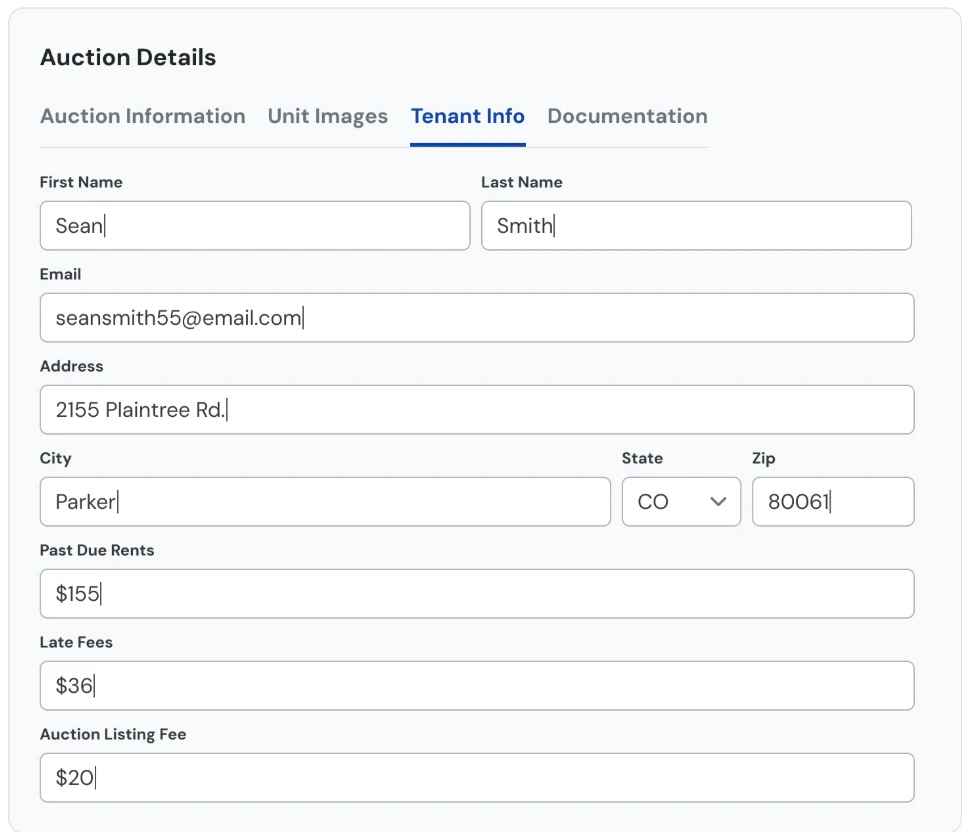
Auction Information, Unit Images, Tenant Info, and Documentation each answer one question: what's being sold, what it looks like, who owned it, and whether the sale is legally ready. Tenant names, addresses, and debts now sit in their own tab, apart from the public listing.
Helper text that coaches
Under Starting Bid: "Starting low ($10–$25) typically attracts early bidders and drives higher final prices." Small prompts like this help operators run better auctions.
Structured categories
Free-text tags became multi-select categories and a unit attribute, which gives buyers consistent filters on the marketplace.
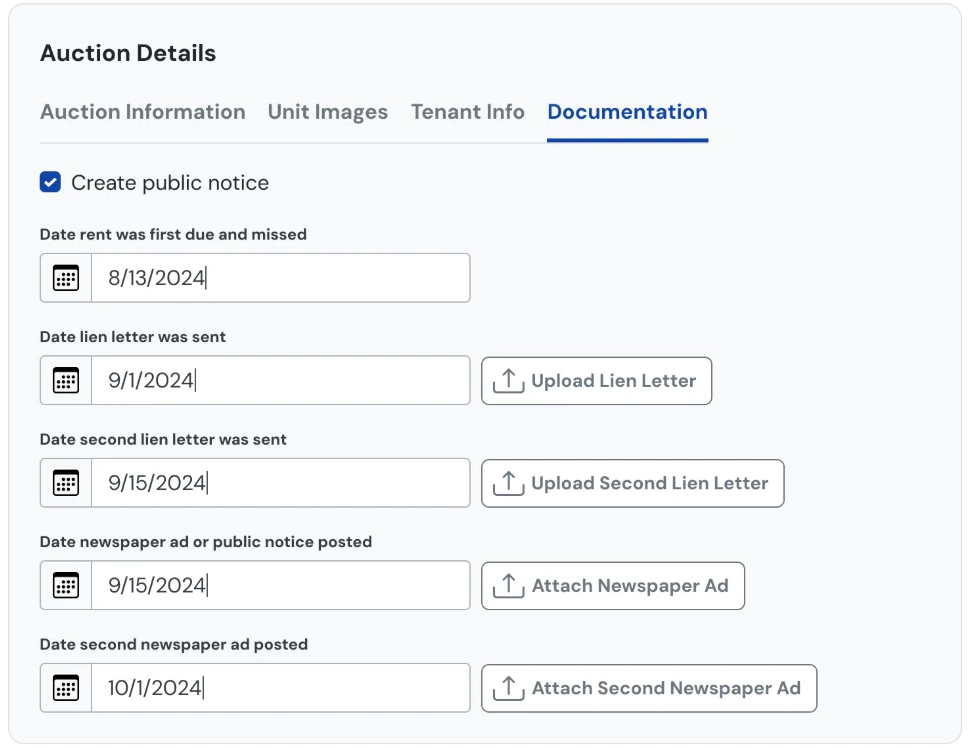
A checkbox became a compliance record
"Create public notice" opens a step-by-step lien-notice timeline: rent missed, two lien letters, two newspaper ads, each with a date and an attached document. Each auction keeps its own record of notices.
One obvious primary action
Three competing buttons became Save Draft and Create Auction in a sticky footer, so an interruption never costs an operator their work.
The whole platform
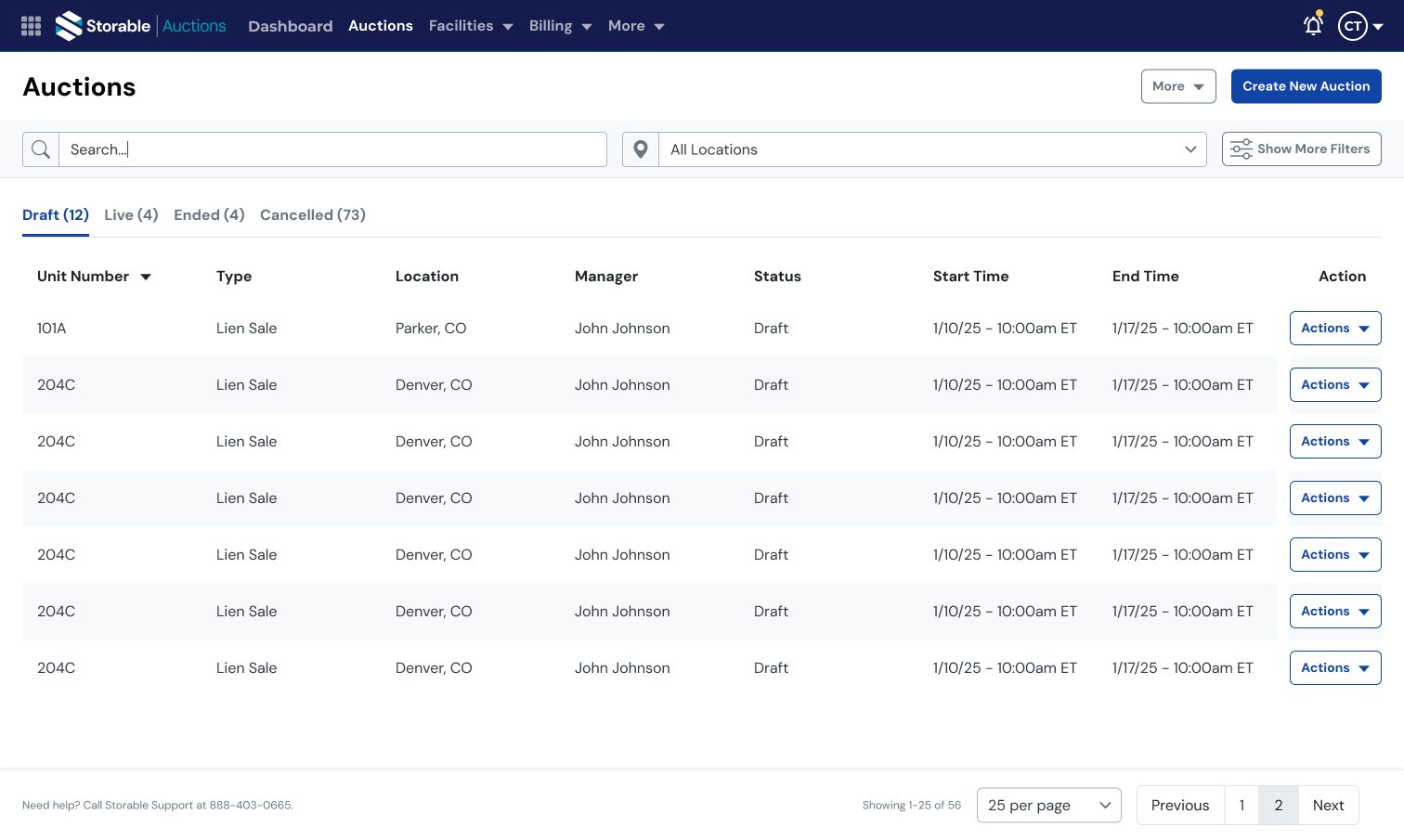
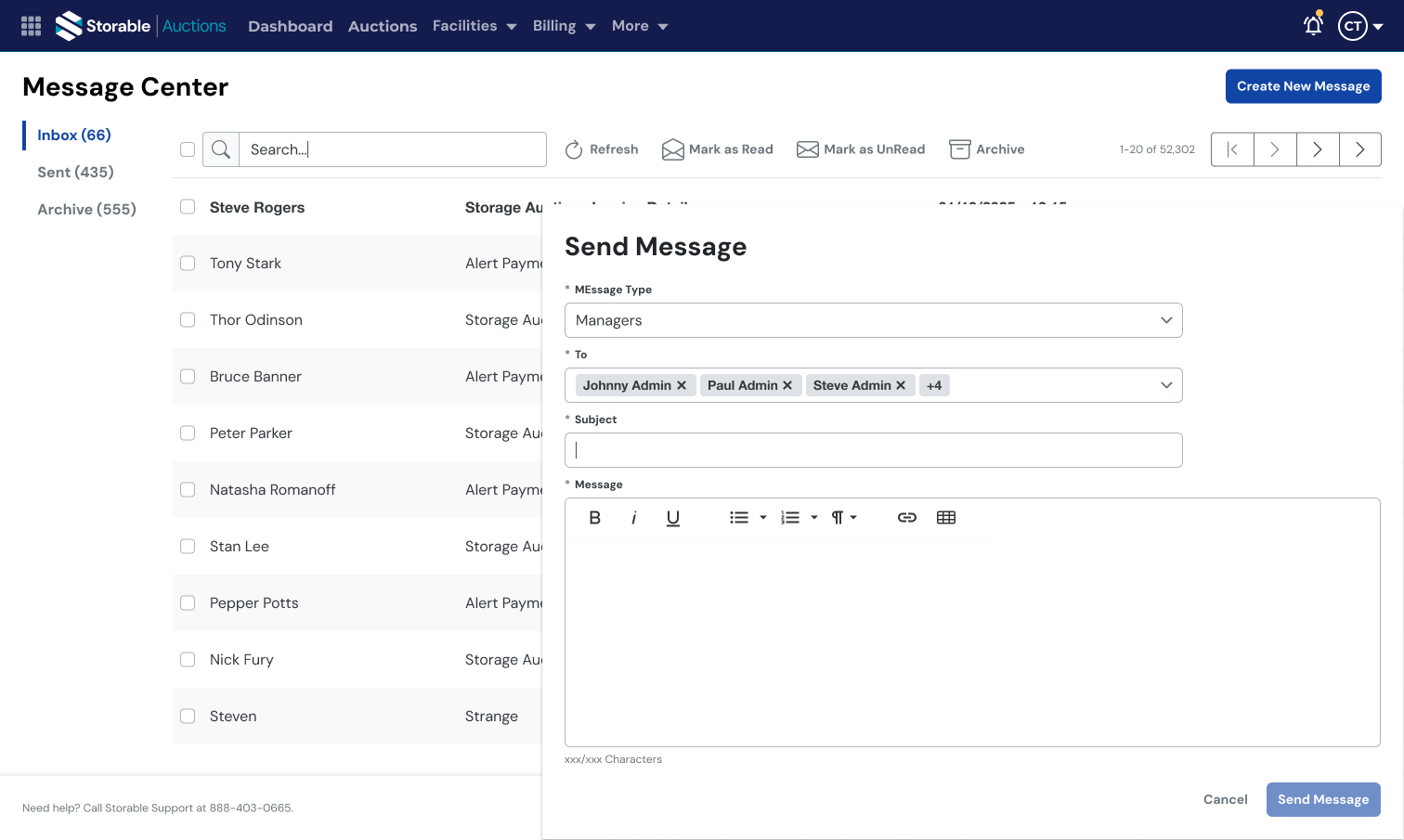
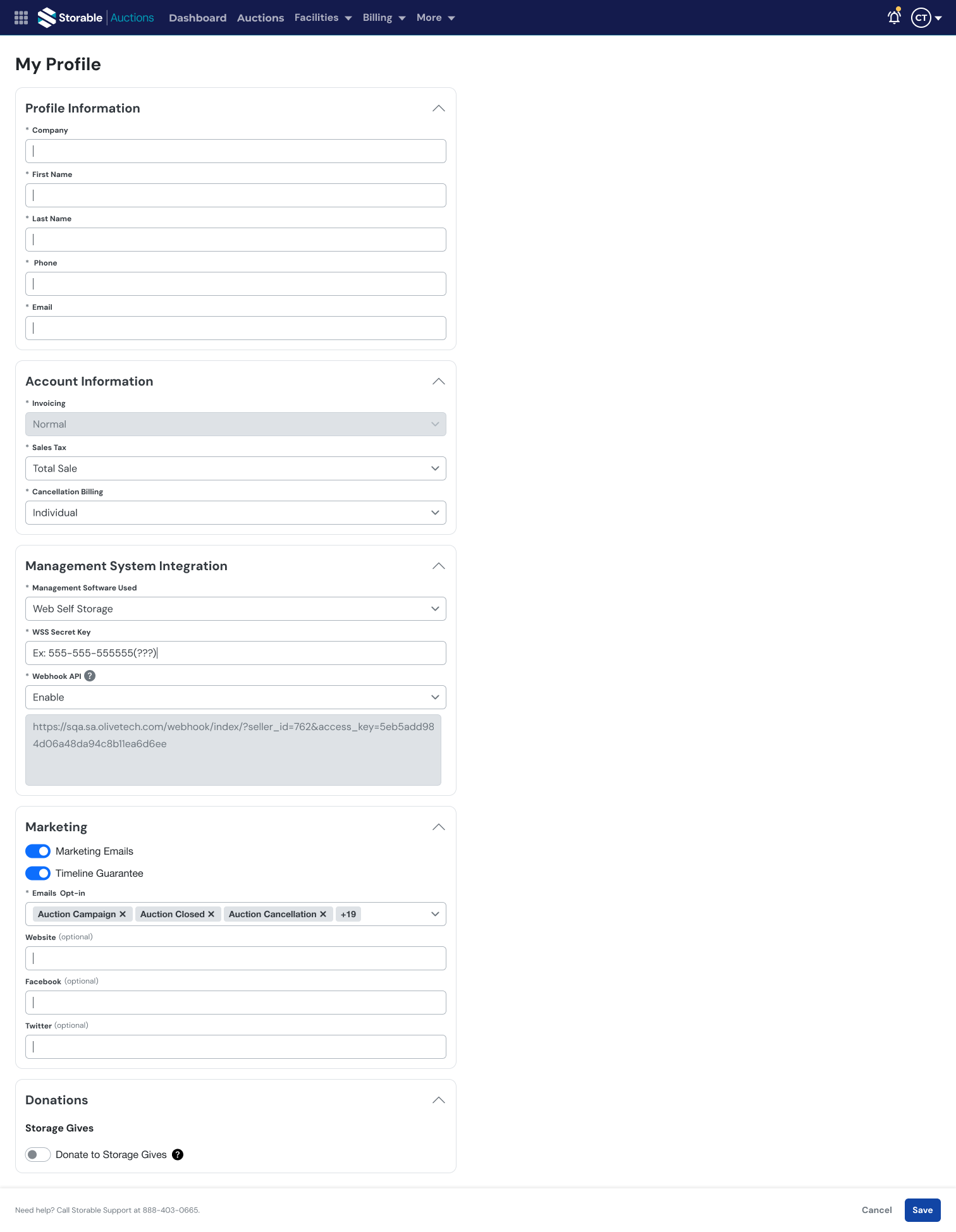
On a tight deadline, I carried the same patterns across the rest of the seller application: managing auctions, messaging bidders and managers, and account settings, all rebuilt on the shared design system.
How I led
Storable had a shared Component Library meant to sit at the center of every product, but migrating acquired front ends kept losing out to feature work. I made the case to rebuild Storable Auctions on the shared system rather than reskin the legacy UI.
Engineering's first instinct was to keep the existing structure, out of a reasonable concern about scope. So I didn't argue on design merit alone. I explained the cost of a structure that was failing operators and of maintaining a one-off front end, then brought in developers from other Storable teams who had already built on the Component Library to consult with the Auctions engineers. After hearing from them, the Auctions team agreed the migration wouldn't add scope, and we went ahead.
The rebuild needed patterns the system didn't have, so I designed and contributed a timezone-aware date/time picker and advanced filtering patterns that other Storable products now use. I also led the rebrand from StorageAuctions.com to Storable Auctions and the buyer-side marketplace redesign.
Impact
Setup time comes from timing the task with about 10 operators and support staff, before and after the redesign. The ticket figure is Support's estimate, based on the volume and types of phone and email requests.
The platform now runs fully on the Storable Component Library under the Storable Auctions brand, and its two new patterns are shared across products. The plan was for future acquisitions to follow the same approach: research the real workflow, rebuild on the shared system, and contribute back.