One online move-in across 9,000+ facilities
Storable was formed by merging several companies, each with its own online rental experience. Over a year, three teams unified them into one reusable online move-in that lives inside any operator's website or the SpareFoot marketplace. Another designer and I designed the flow together, and I advocated for the tenant through every technical trade-off.
- Role
- Product designer, one of two; we split research and UI equally
- Timeline
- Mid-2023 to mid-2024 · 1 year
- Team
- Three full teams across storEDGE, Sitelink, and Marketplace
- Reach
- 1,000+ operator websites, 9,000+ facilities




The challenge
Storable grew by merging several companies, and each had its own online rental flow. Together they made for a disjointed journey:
- Several rental flows across the SpareFoot marketplace and operator websites, each built and maintained separately. The team was effectively building a new online move-in every year.
- Two facility management systems underneath (storEDGE and Sitelink), each with its own move-in, units table, and tenant portal.
- Tenants dead-ending: they could find a unit, but often had to wait for a call or visit the office to actually rent it.
- Websites NPS of –33 in H2 2023, a churn risk in a core revenue line.
The goal was to unify the platform to increase conversions and let tenants find, select, and rent a storage unit entirely online.
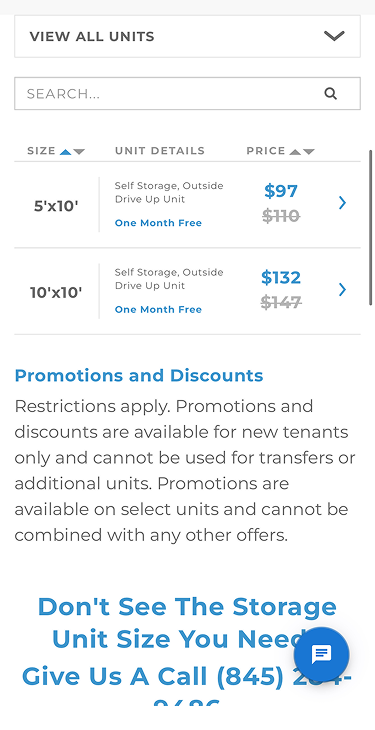
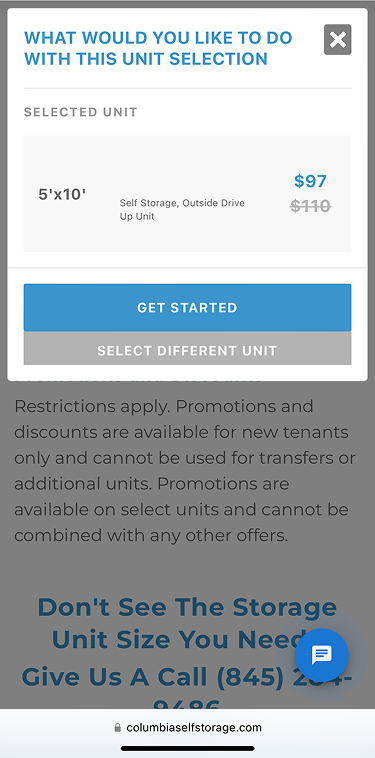
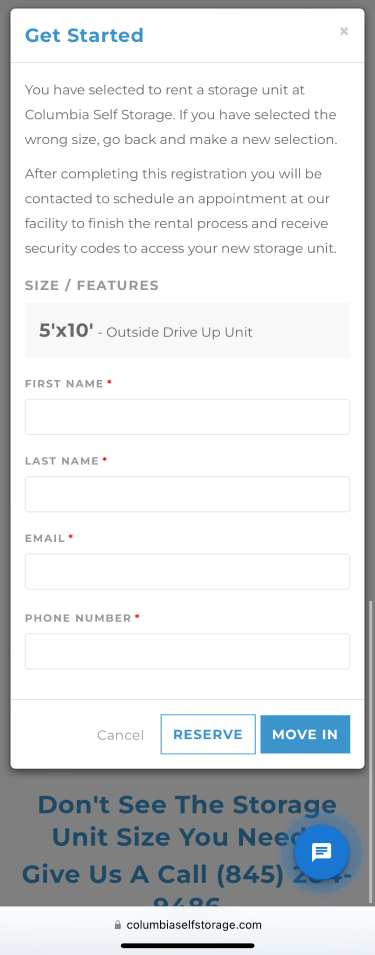
Renting a unit on an operator's website, before the redesign
What I heard
I ran two rounds of user interviews with 10 operators, and made a video summary of the highlights. I knew the Websites side; the other designer knew SpareFoot, so between us we covered both channels. Four findings shaped the flow:
- Payment before lease. Collect the card first, so operators know a reservation is real before the lease is generated.
- Driver's license upload. Operators need ID verification, so it's built into the flow rather than left for move-in day.
- Autopay by default. Set up recurring payment during move-in, when tenant intent is highest.
- Tenant clarity. Pricing, fees, and next steps stay clear at every step.

Aligning three teams
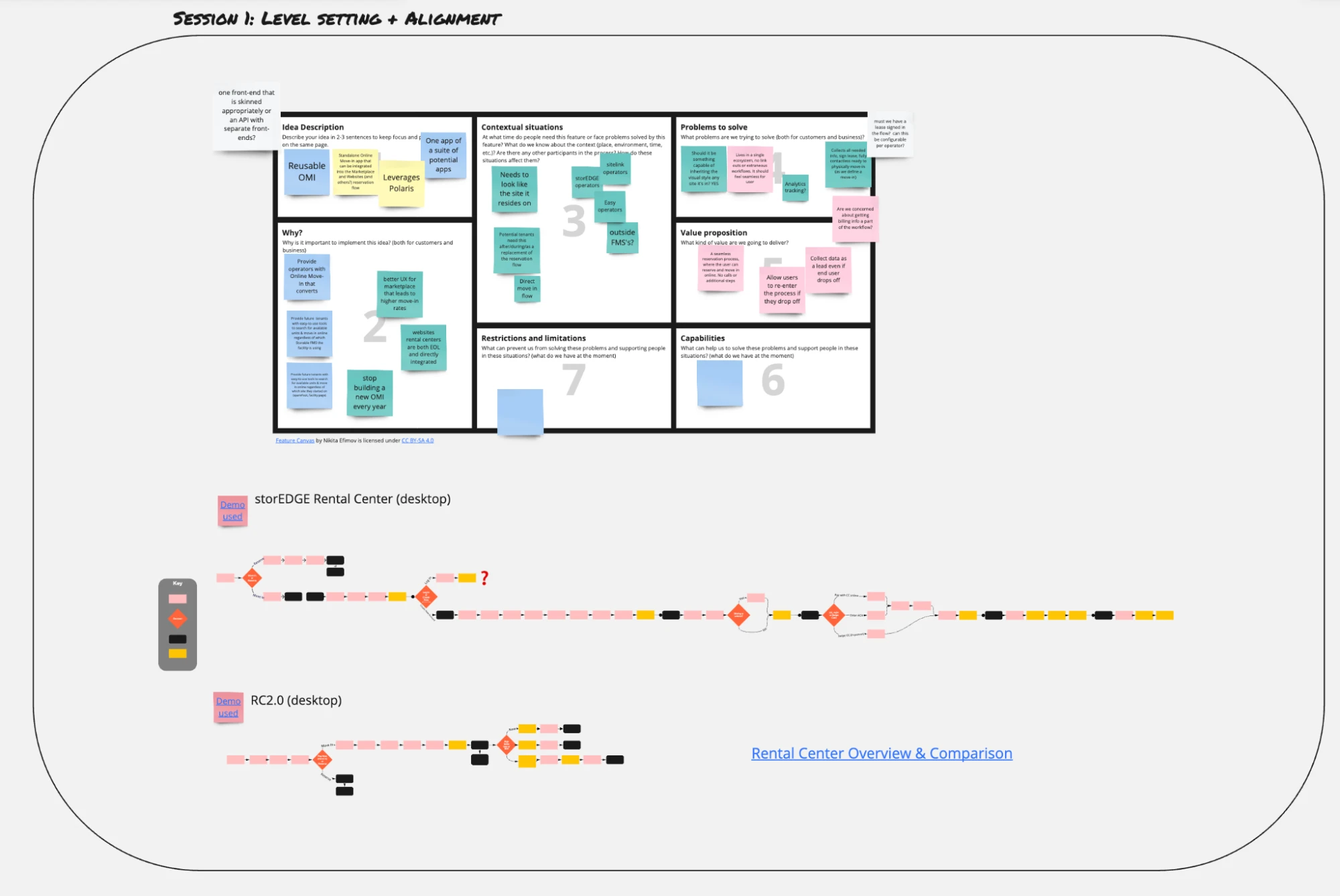
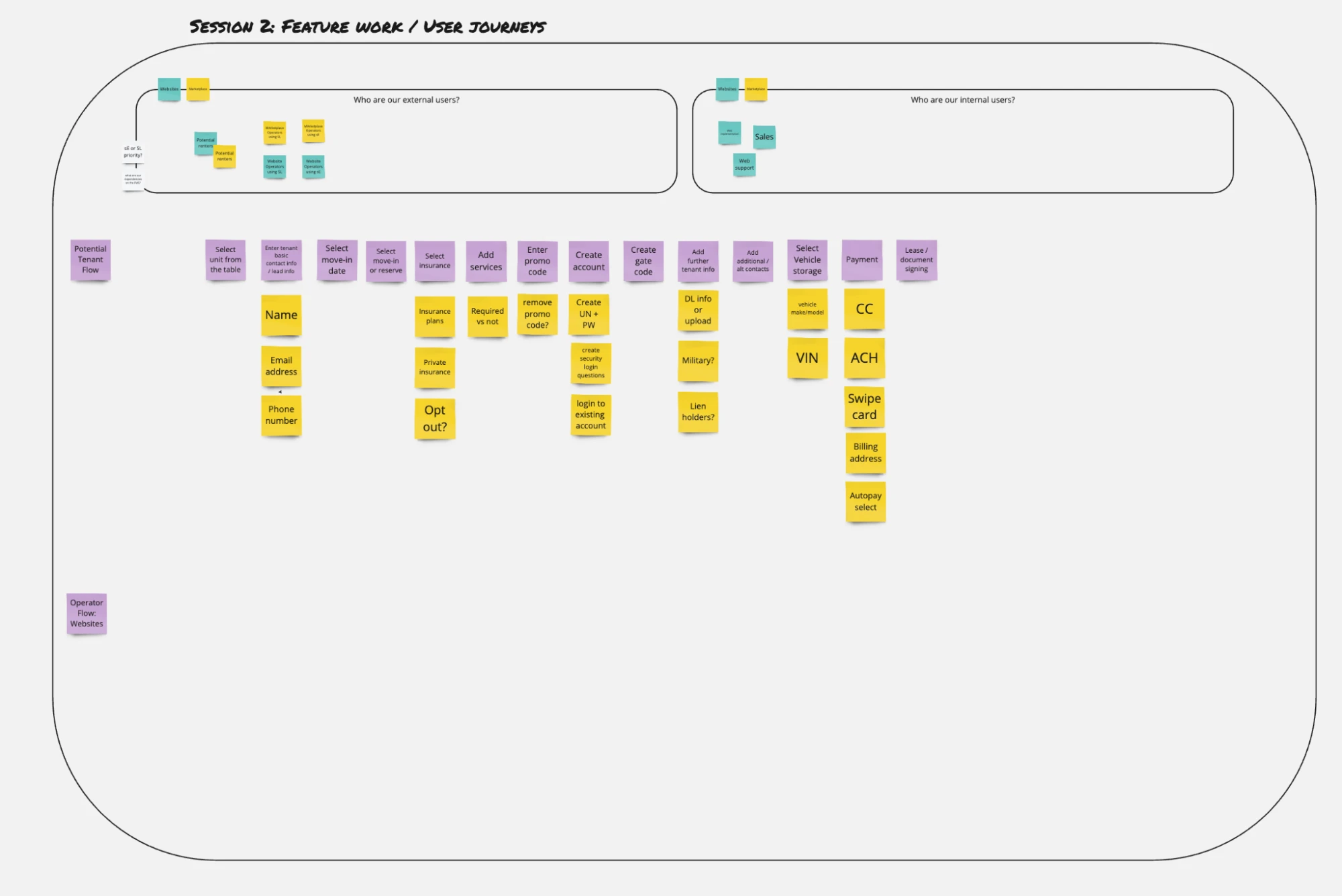
Three full teams of PMs, engineers, and designers across storEDGE, Sitelink, and Marketplace worked through three sessions. We agreed on one reusable move-in that takes on the look of whatever site it lives on, never links out, and captures the lead even if a tenant drops off. Then we mapped every user and every step of the tenant journey, and settled the APIs and data behind both management systems, including what ships first.
I brought the tenant's perspective and my Websites experience into a room that was mostly working through system constraints.
The flow
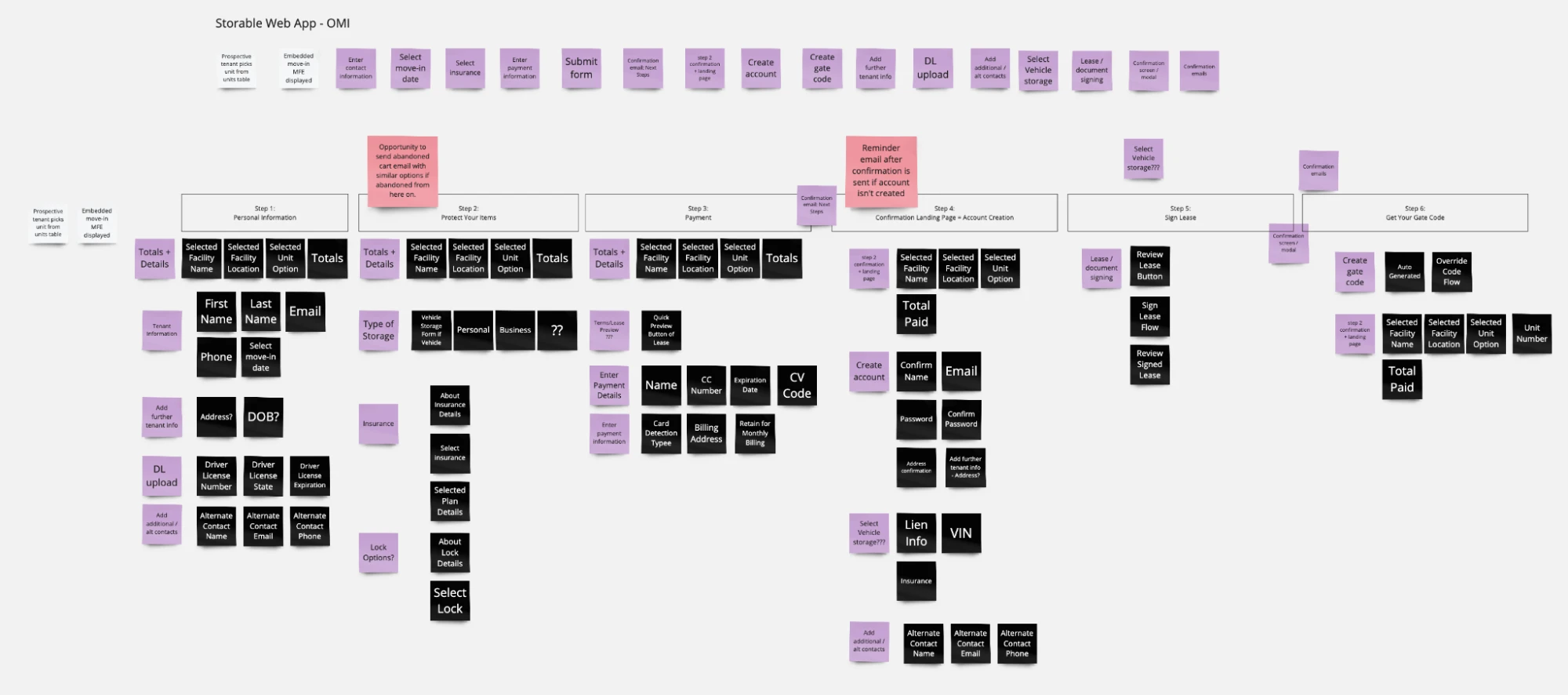
The sessions produced one flow that every channel shares, mapped step by step with the data each one needs. The key decision was the order: payment first, paperwork after.
- Personal information: contact details, move-in date, driver's license, alternate contacts
- Protect your items: storage type, insurance, and lock
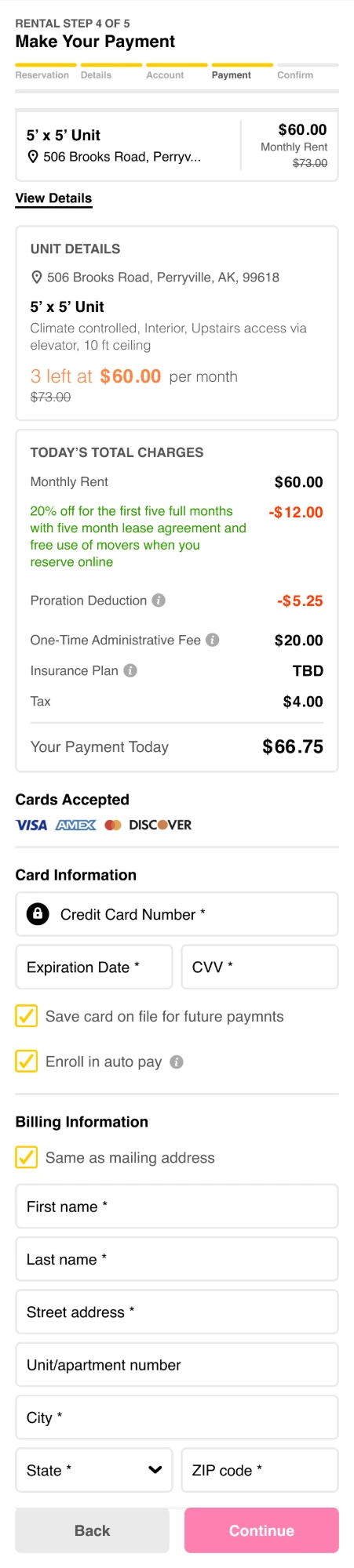
- Payment: card and billing, with today's total itemized
- Confirmation, then create your account
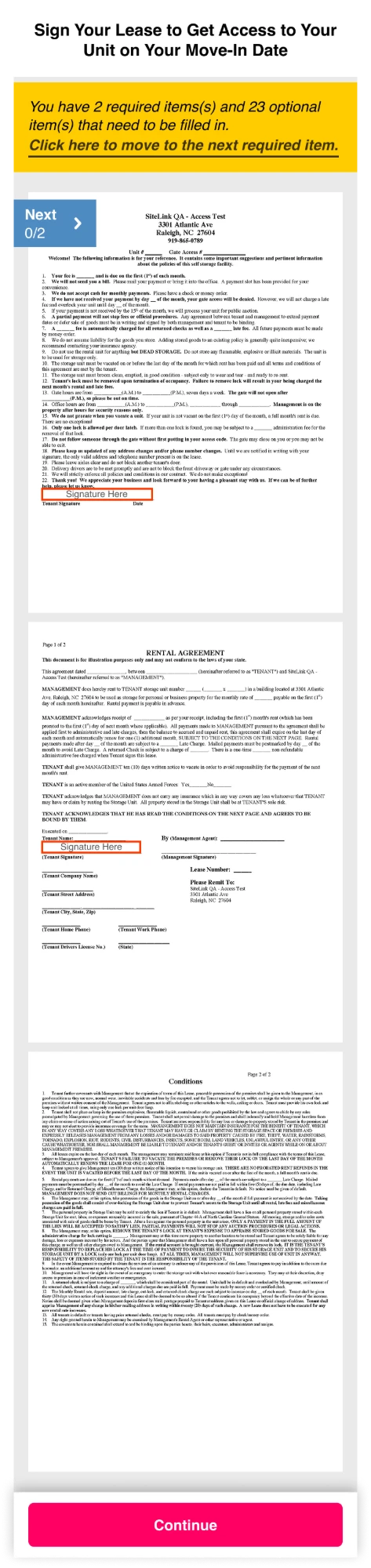
- Sign your lease
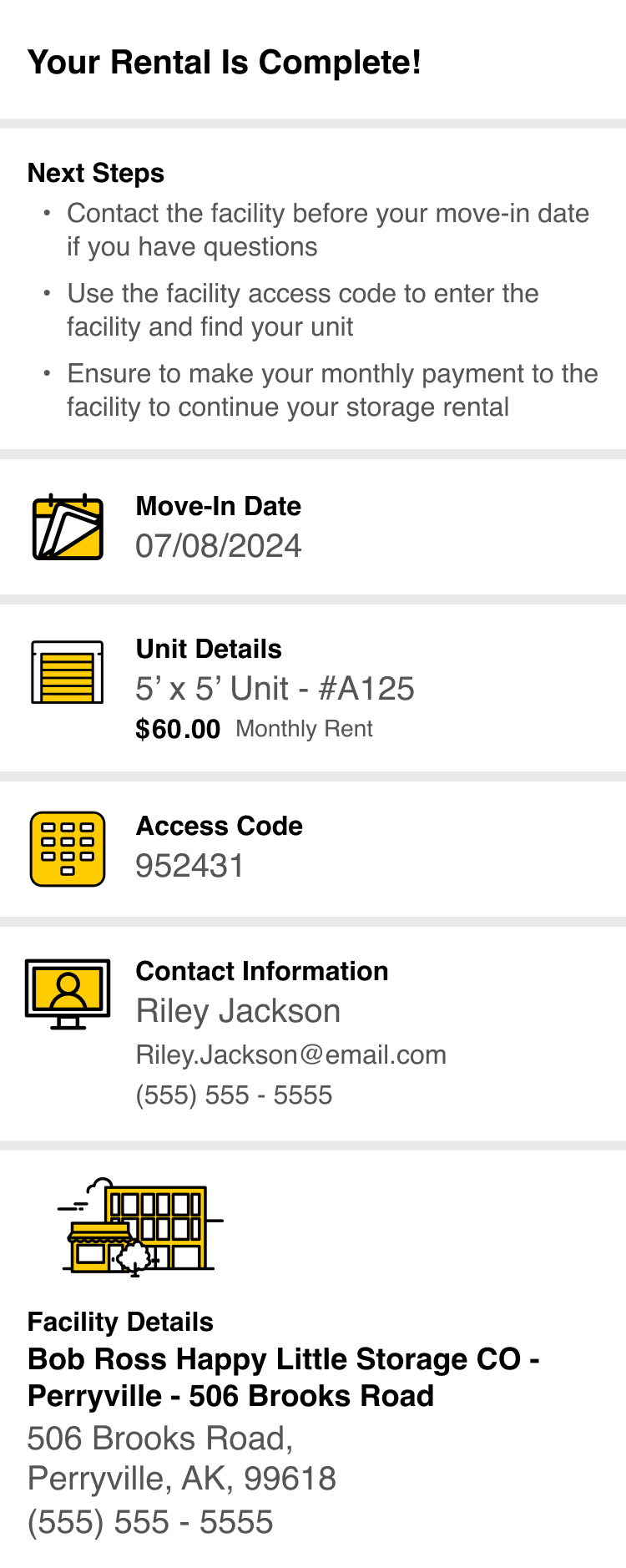
- Get your gate code
Payment comes first because once a tenant has paid, they've committed to the unit, and account creation and lease signing become follow-through rather than hurdles in front of the sale.
For tenants who leave mid-flow, an abandoned-cart email brings them back, and a reminder goes out if a tenant pays but doesn't create an account.
Design decisions
One flow, every channel
A platform-level application, so a tenant gets the same experience on SpareFoot or on any operator's website.
It looks like home
The flow inherits each operator site's visual style, so renting never feels like being handed off somewhere else.
The unit and total stay in view
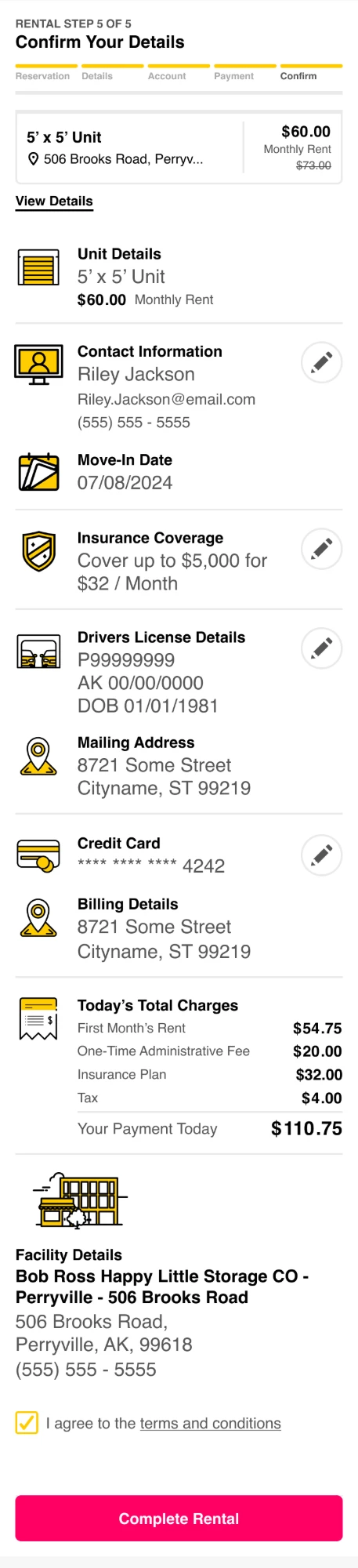
The selected unit, facility, and price sit at the top of every step, and today's charges are itemized line by line, including discounts and proration, before the tenant pays.
One review screen
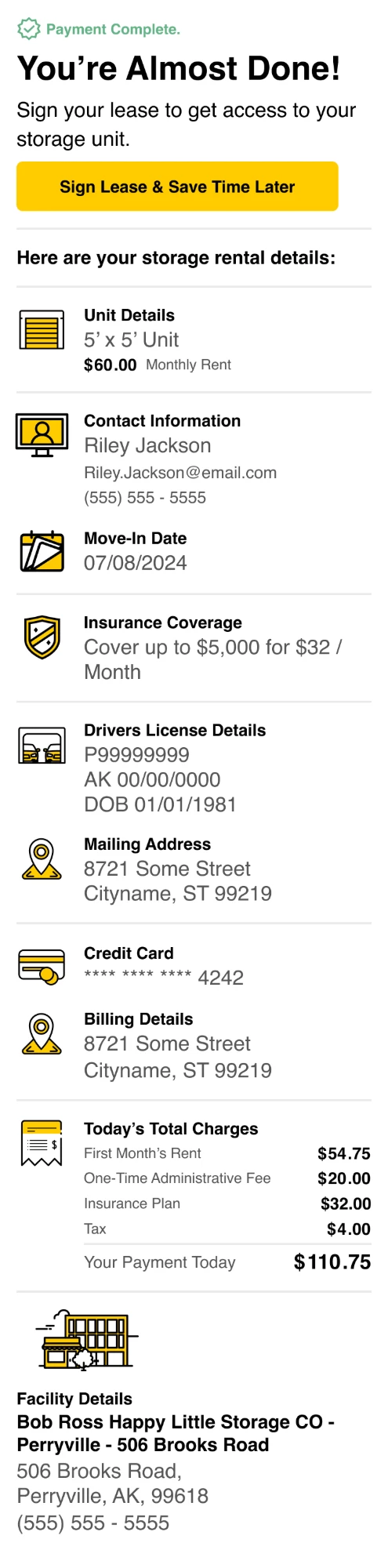
Every detail on a single confirmation page with inline edit links, so fixing a typo doesn't mean starting over.
Never lose a tenant
Lead capture early, abandoned-cart and reminder emails, and the ability to pick up where you left off.
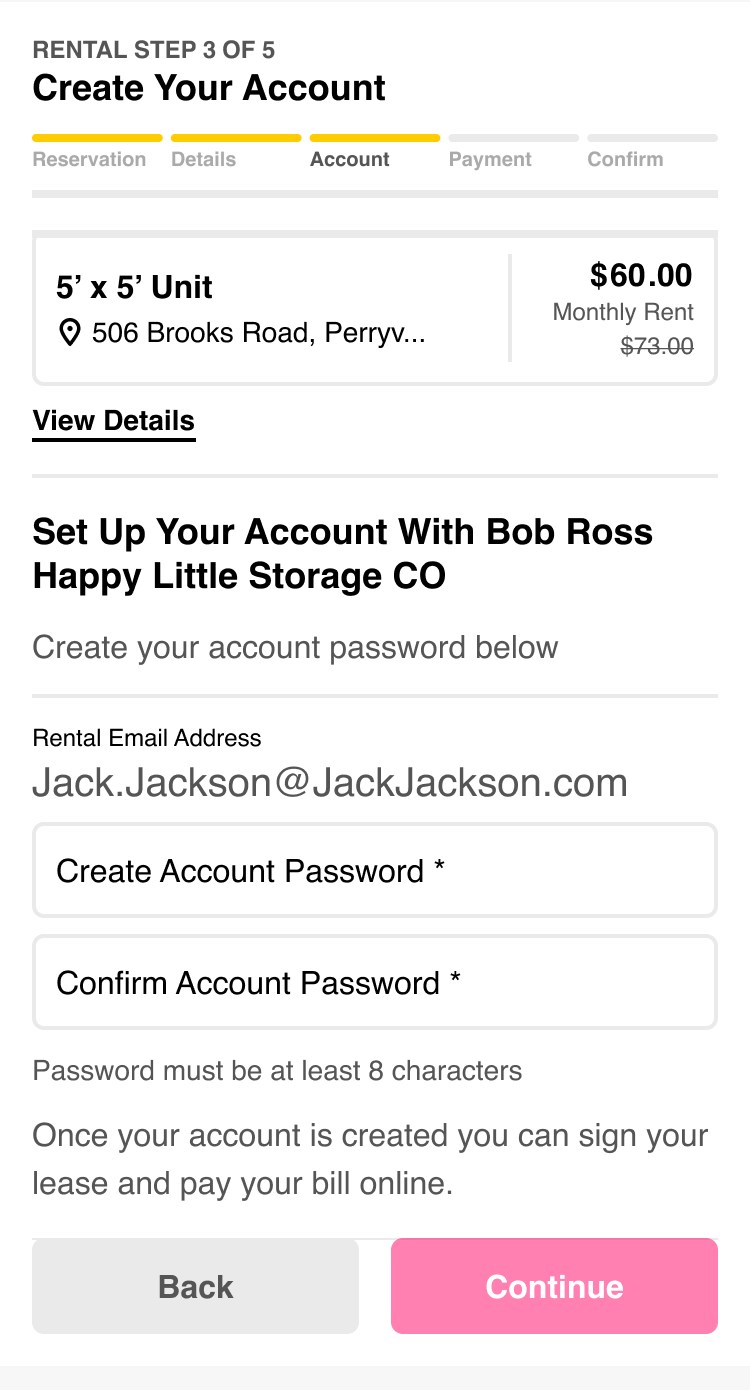
As first shipped, after engineering pushback on the page order. Account creation (step 3) landed ahead of payment (step 4).
How I led
Three full teams and two facility management systems each brought their own data, APIs, and limits. Most of the work was navigating those limits while keeping the tenant experience intact.
Not everything went to plan. The design put payment before paperwork, so tenants committed to a unit before creating an account or signing a lease. During the build, engineering pushed back on the page order because of system constraints, and we shipped with account creation ahead of payment. I accepted the concession to keep the project moving.
It came back to bite us. The account-first flow caused enough problems that the team reworked it back to the original payment-first design.
Concessions are part of shipping across systems, but some decisions carry the user experience. Since then, I name those up front, along with the risk of changing them, so any trade-off is a conscious one.
Impact
Online move-in now runs across 1,000+ operator websites and 9,000+ facilities as one reusable flow, so the team no longer rebuilds it every year. These results reflect online move-in together with the website builder and navigation improvements that shipped alongside it.